BBC · Case study
Redefining BBC iPlayer for the TV
One strong concept for iPlayer that could work across PlayStation, smart TVs and many other connected devices.
01The problem
iPlayer on TV existed on lots of platforms in lots of different forms, with inconsistent UX and performance.
I was briefed to redefine TV iPlayer around one strong central concept that made the most of connected devices and could be built across many platforms.
02My role
I was Lead Designer, from the first review of the existing landscape through research, ideation, prototyping, testing and final visual design.
03Approach
We started by reviewing iPlayer across every TV platform in 2010, documenting what worked, what didn't and where performance let people down.
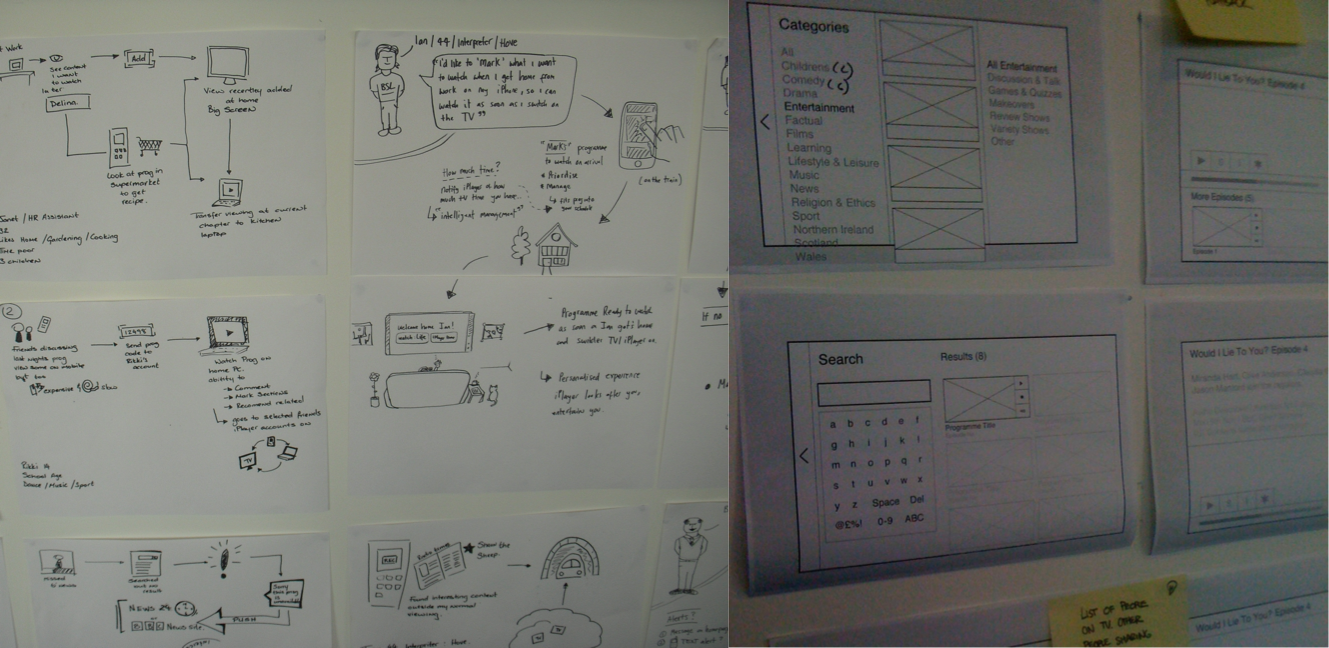
Then we went for quantity over quality: lots of scenarios and journeys, and even importing our iPlayer IA into competitors' interfaces to see how it held up. The lessons from each fed straight into wireframes.
04Key decisions
Horizontal wins
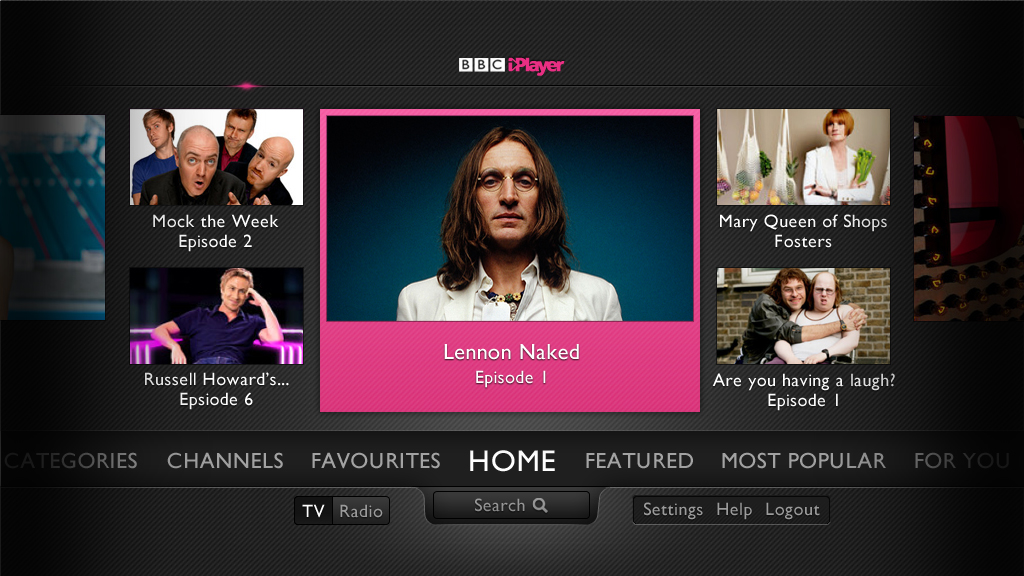
We built two Flash prototypes, one horizontal and one vertical, and tested them over several rounds. People preferred the horizontal model.
Safe on every TV
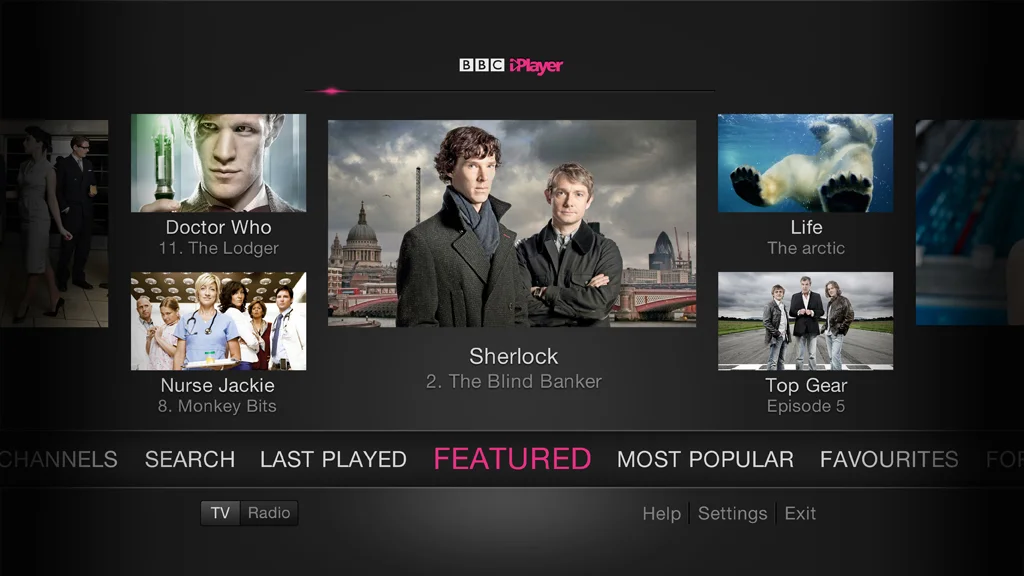
We spent weeks refining the visual design and tested it on a range of TV screens to make sure it was TV safe.
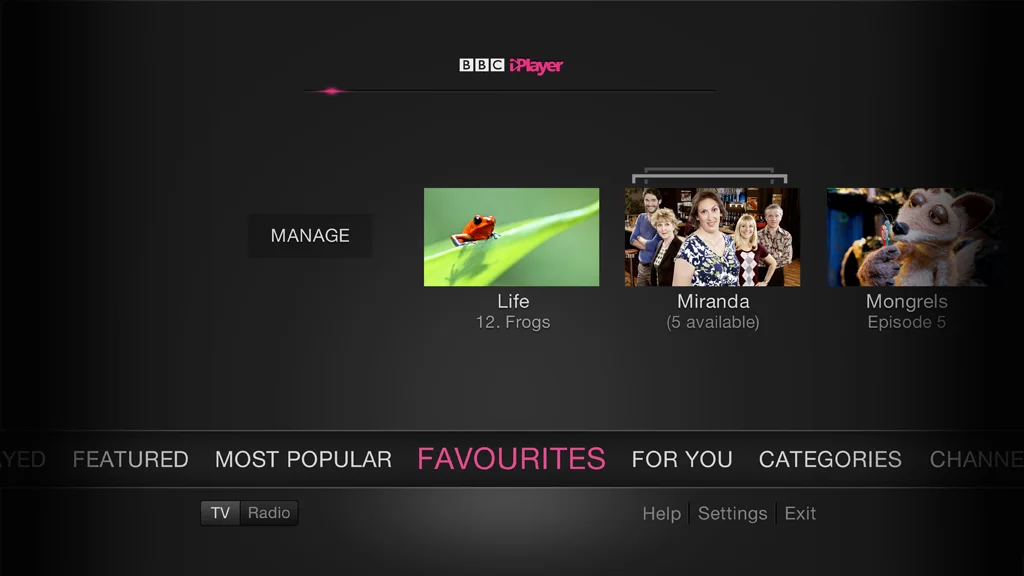
Your programmes, close at hand
Favourites and search sit in the same simple model, so people can get back to what they love quickly.
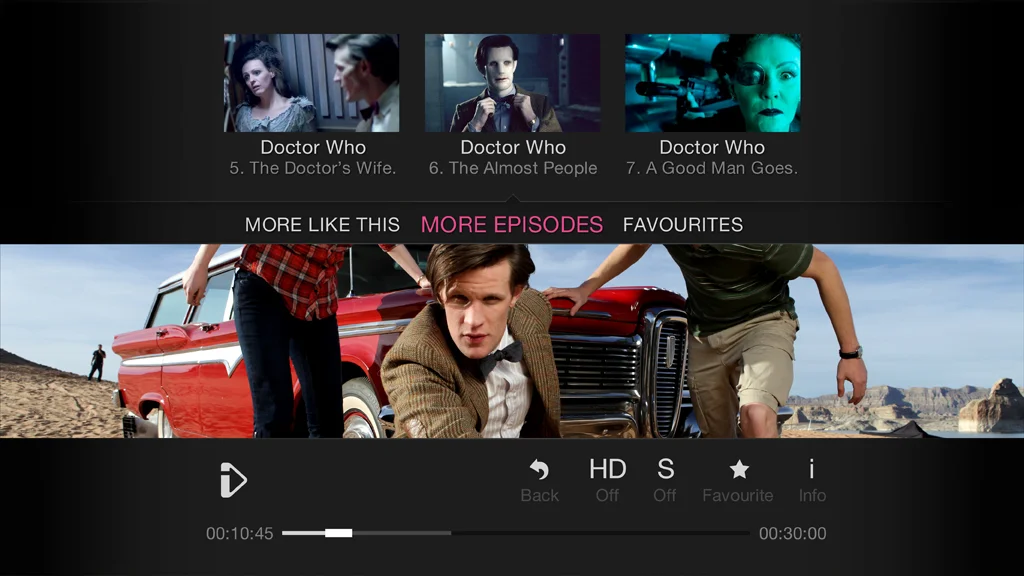
Information without leaving the player
Programme information and controls slide in over playback, so people never lose their place.
05Designed for everyone
Designing for a remote meant a simple, predictable horizontal model with clear focus and large type.
Testing on many different screens made sure nothing important fell off the edge of a TV.
06Outcome
The new TV iPlayer launched in September 2011 across connected devices, averaging 6M monthly requests and winning a Connected TV Award.
07What I learned
Putting two working prototypes in front of people settled the navigation debate quickly, and much more convincingly than any argument could.