Entities & Actions Framework

Overview
As Prime Video expanded across content types and platforms, teams began introducing new user actions such as Follow, Like, Favorite, and Watchlist across titles, creators, and sports entities. These efforts were uncoordinated and often solved similar problems in different ways, creating overlap, inconsistency, and unclear outcomes for customers. Actions were being designed in isolation without a shared framework. Similar concepts existed side by side without clear differentiation, and there was no consistent way to evaluate when a new action should be introduced or how it should behave. This increased cognitive load for customers and introduced long-term complexity as more actions were added.
I led the Entities & Actions initiative to unify this into a single system, defining how actions should work across the ecosystem and creating a scalable foundation for future features. (ADD PM ROLE, UX, UXR)
Approach
We reframed the problem from individual features to a system and defined a shared model of Entities and Actions, giving teams a common language. I created an ecosystem map of explicit signals, showing how actions translate into outcomes such as personalization, notifications, and saved content. This exposed duplication and aligned teams on how the system should behave end to end.
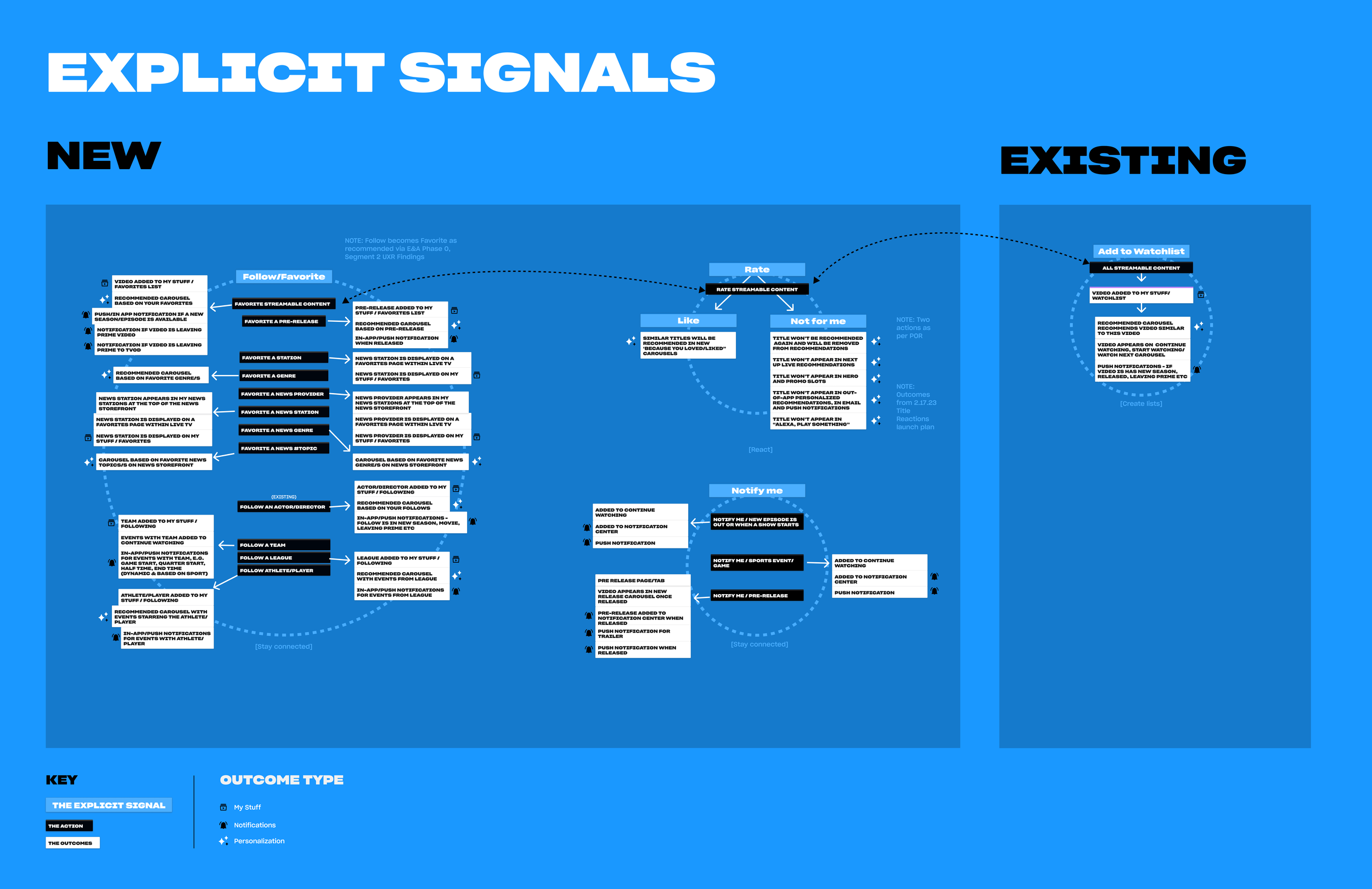
Ecosystem map
From there, I consolidated actions into a smaller set of standardized categories with clear outcomes, and defined an Entity–Action matrix to ensure consistency across entity types and prevent redundancy.
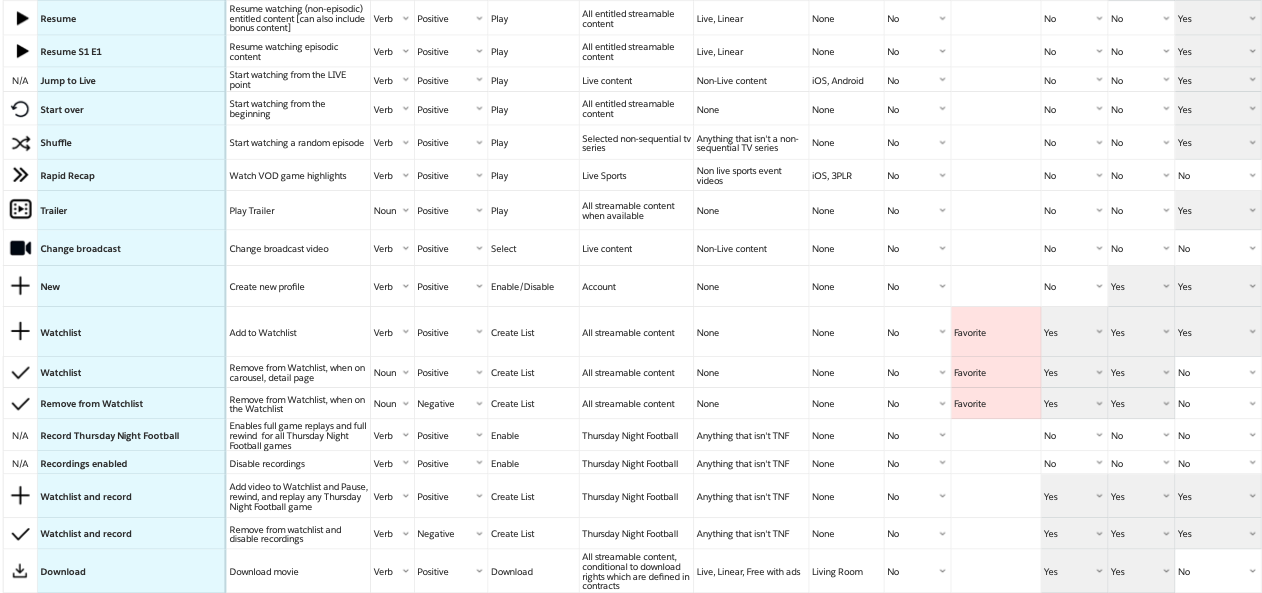
Snapshot of the matrix
Decision Framework
A key output of this work was a decision tree used to evaluate all new and existing actions. Instead of subjective debates, teams are guided through a structured set of questions that assess whether an action solves a real customer need, whether the outcome is clear, whether it produces a meaningful signal, and whether it overlaps with existing actions or fails to scale across devices and regions.
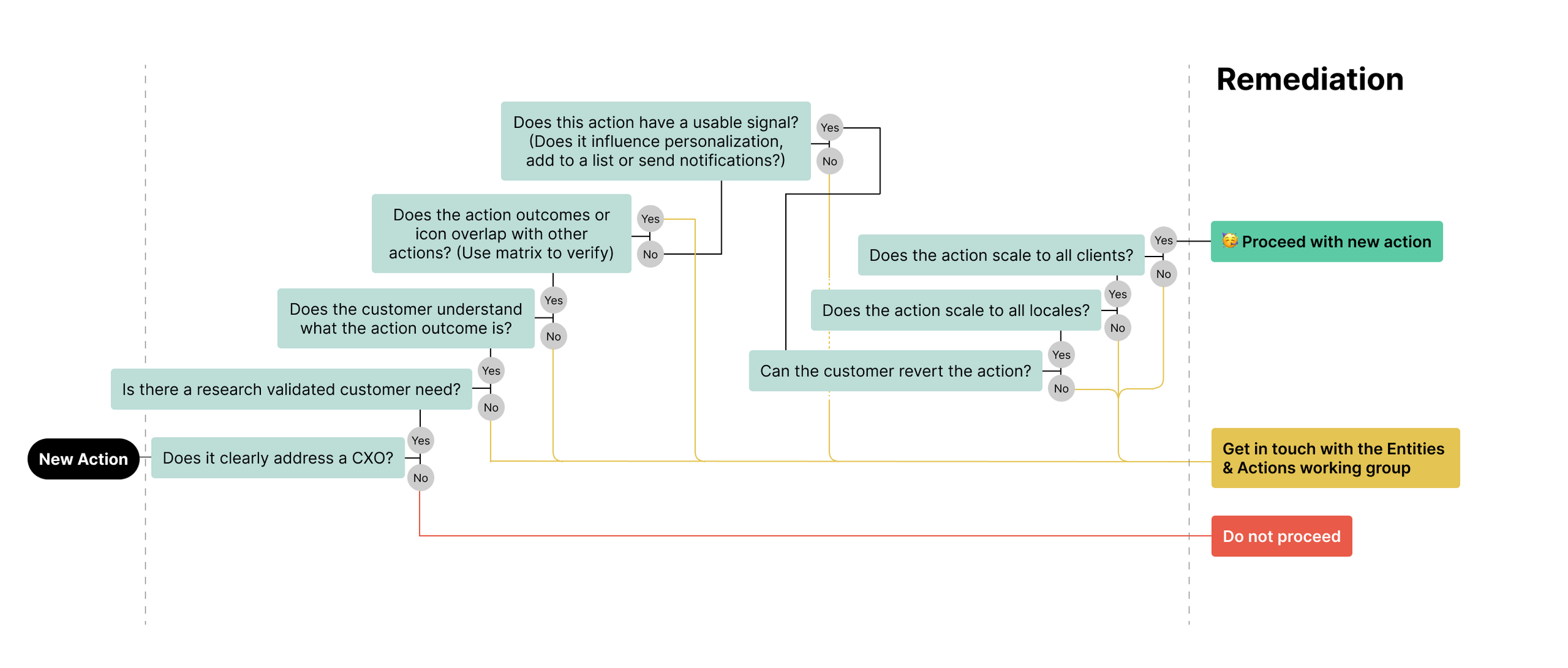
New action decision tree
Each path leads to a clear outcome: proceed, refine, or do not proceed. This became the entry point for any new action proposal and ensured consistency across teams.
Research
The framework was grounded in research. I partnered with UXR to understand how customers interpret actions and where confusion occurs when multiple actions coexist. This included perception testing to validate action categories and usability testing to understand how many actions customers can process and where overlap breaks down clarity.
Governance and impact
To ensure long-term adoption, I helped establish a working group responsible for maintaining the framework and reviewing new actions. This ensured the system could scale without fragmenting again.
This work aligned multiple teams around a shared system and replaced fragmented decision-making with clear, repeatable guidelines. It reduced overlapping actions, improved clarity for customers, and strengthened the quality of signals used for personalization. Most importantly, it shifted Prime Video from designing individual features to designing a scalable interaction system.