Prime Video · Case study
One system for every Follow, Like and Watchlist
Bringing order to the growing list of actions across Prime Video, and a framework for deciding which new ones earn a place.

01The problem
As Prime Video grew across content types and platforms, teams kept adding actions like Follow, Like, Favorite and Watchlist to titles, creators and sports. Each team solved similar problems in different ways.
Similar actions sat side by side with no clear difference between them, and there was no consistent way to decide when a new one should exist or how it should behave. That meant more for customers to figure out, and more complexity every time an action was added.
02My role
I led the Entities & Actions initiative to bring all of this into one system, defining how actions should work across the ecosystem and building a foundation for future features.
I partnered with UX Research on testing and helped set up the working group that keeps the system healthy.
03Approach
We reframed the problem from individual features to a system, and gave teams a shared language: Entities, the things customers care about, and Actions, what they can do with them.
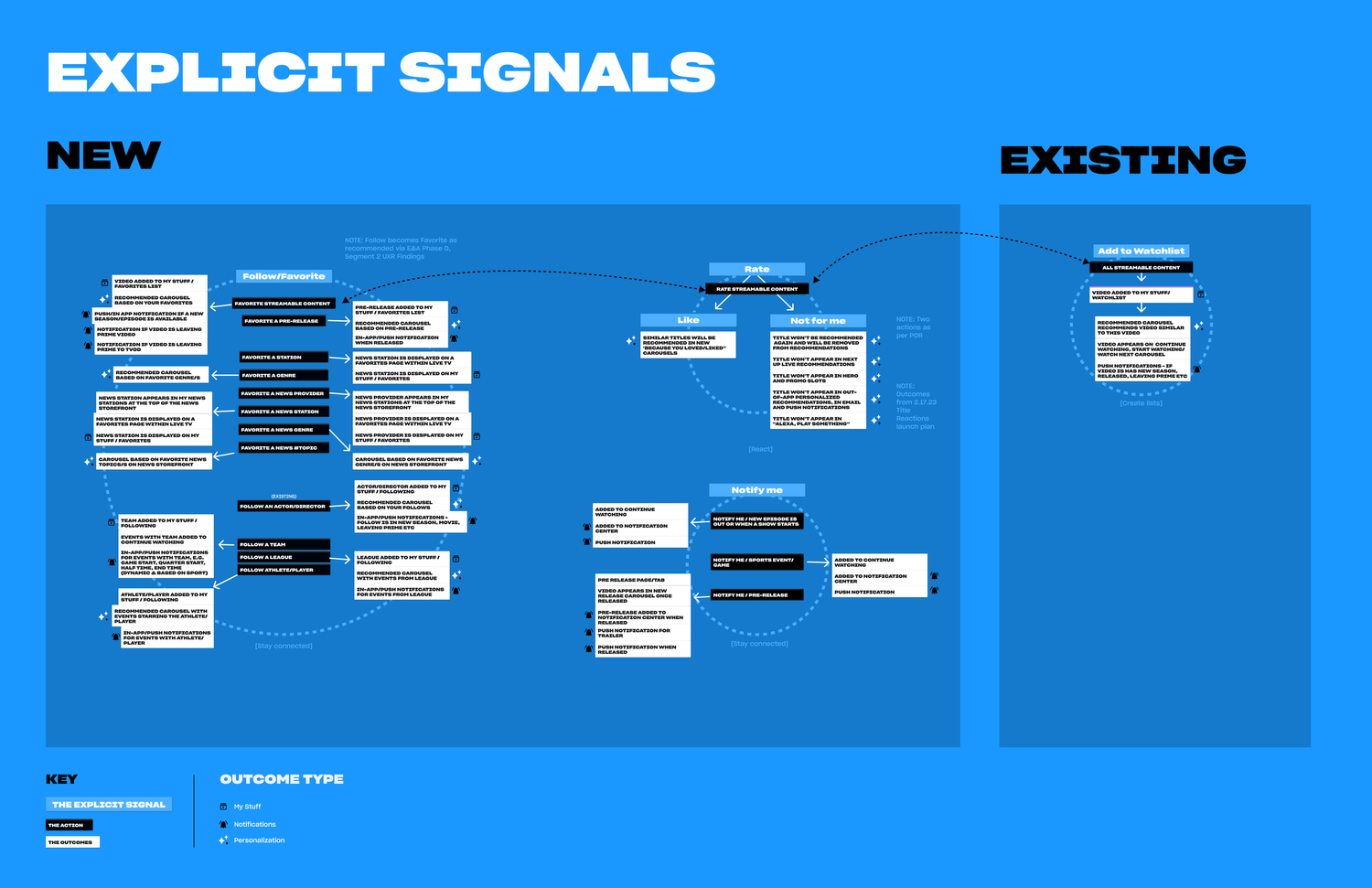
I built an ecosystem map of explicit signals, showing how each action turns into an outcome like personalization, notifications or saved content. It exposed the duplication straight away and got teams agreeing on how the system should behave end to end.
04Key decisions
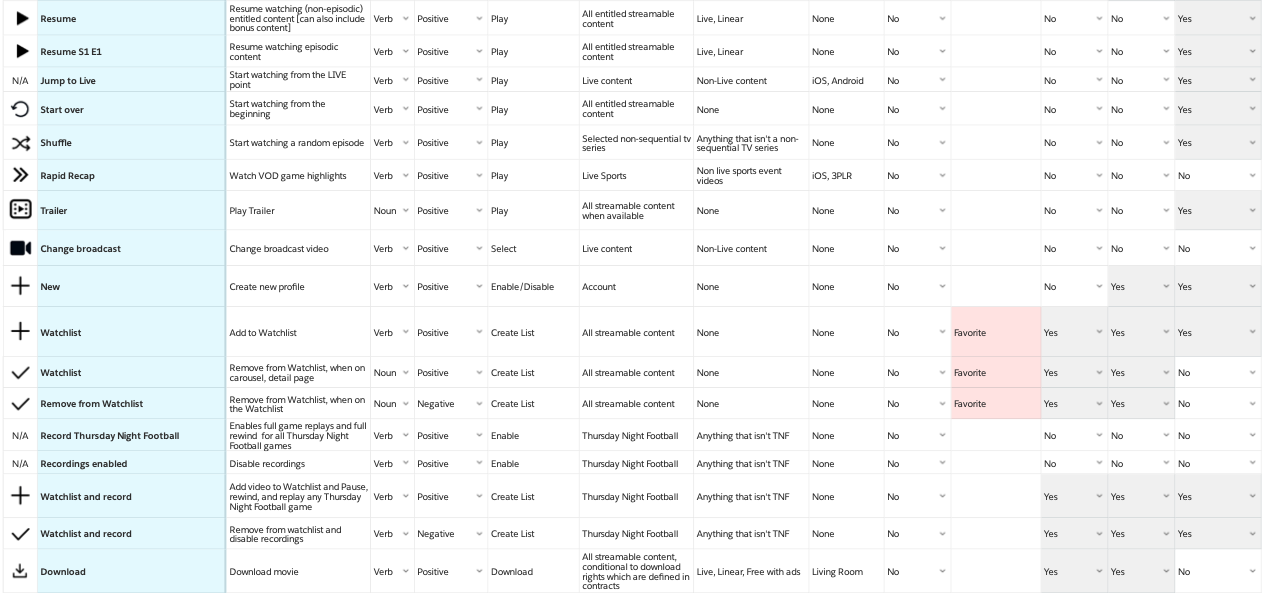
Fewer, clearer actions
I consolidated actions into a small set of standard categories, each with a clear outcome, and an Entity and Action matrix to keep them consistent across entity types.
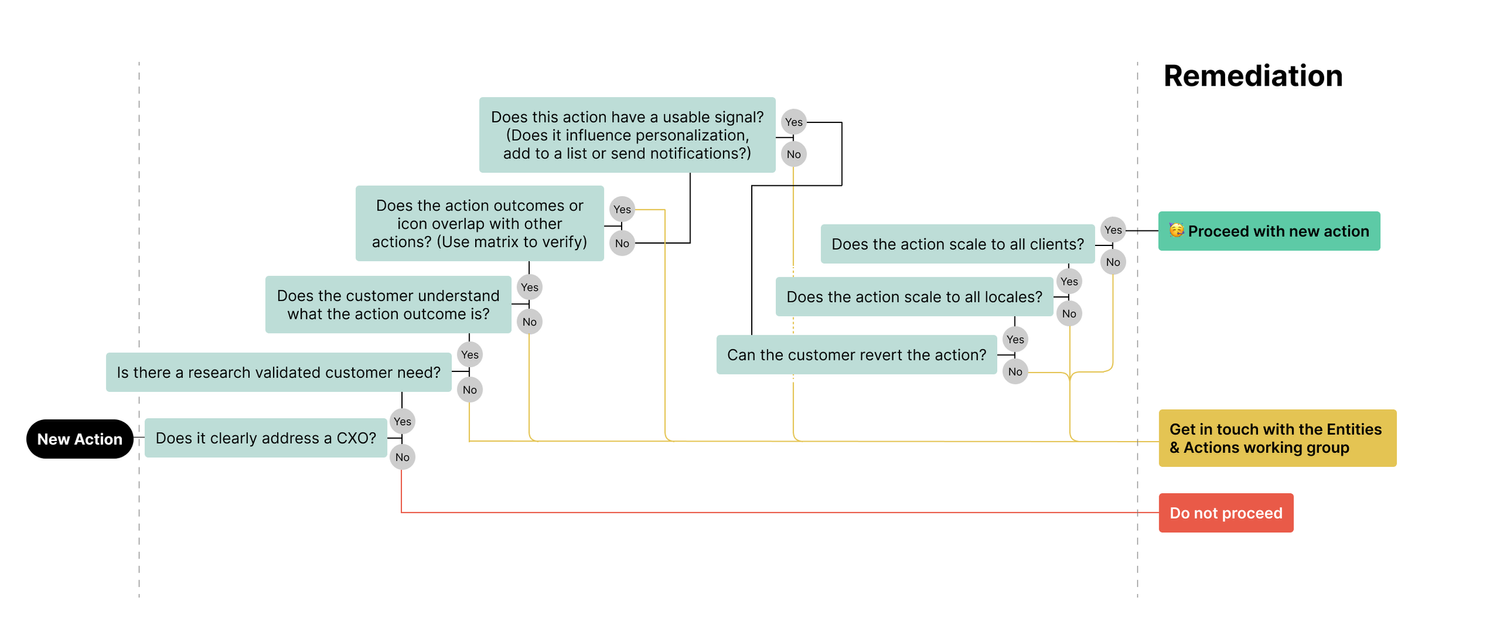
A decision tree, not a debate
Every new action goes through a set of questions: does it meet a real need, is the outcome clear, does it create a useful signal, and does it overlap or fail to scale? Each path ends in proceed, refine or don't proceed.
Grounded in research
Perception testing checked that customers understood the categories, and usability testing showed how many actions people can handle before overlap breaks clarity.
Built to last
A working group now owns the framework and reviews every new action, so the system can grow without fragmenting again.
05Designed for everyone
Fewer, clearer actions mean less to learn and less to navigate, which matters most for people using a screen reader or a TV remote.
Consistent labels and behavior across every device make actions predictable wherever someone meets them.
06Outcome
Teams that had been working in parallel now share one system and one set of guidelines. Overlapping actions went down, clarity for customers went up, and the signals used for personalization got stronger.
Most importantly, Prime Video moved from designing individual features to designing an interaction system that scales.
07What I learned
Giving teams a decision tree ended more arguments than any number of design reviews.